Greater White-fronted Goose
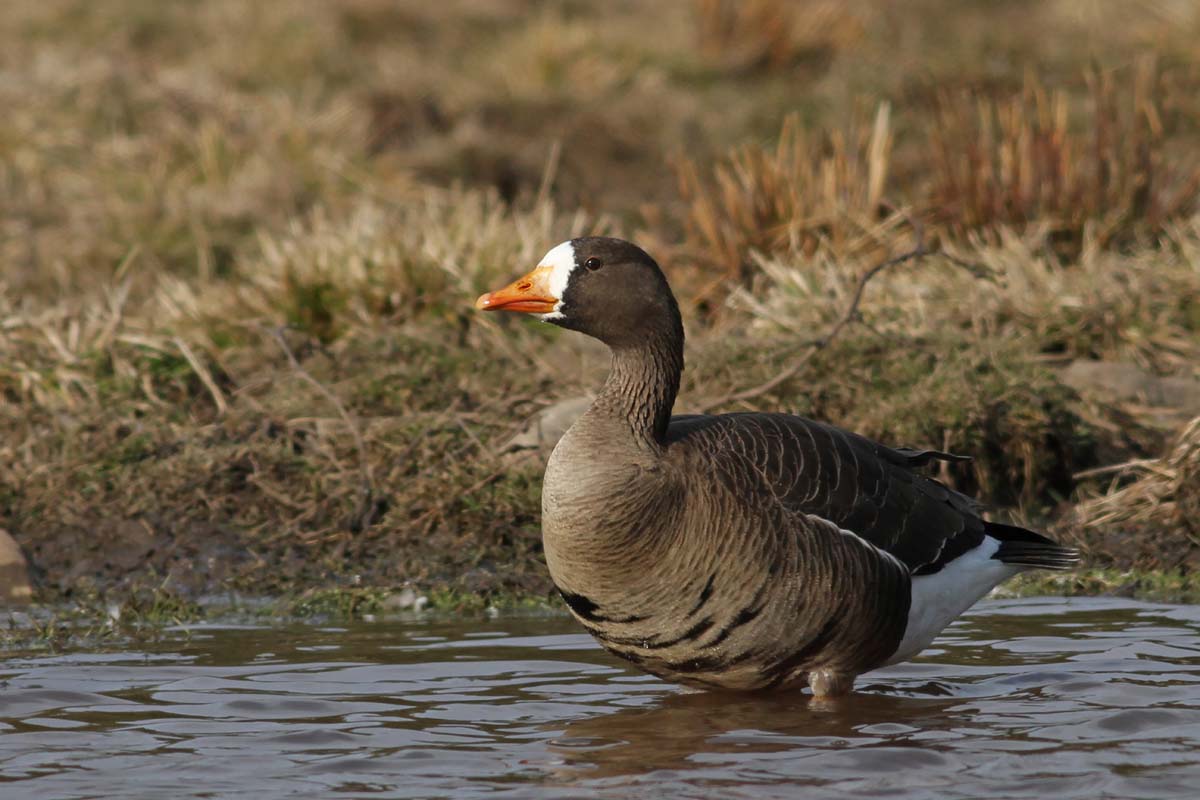
Greater White-fronted Goose. Photo by Nick Bonomo.
Greater White-fronted Goose
Anser albifrons
by Nick Bonomo
Don’t drive by that corn field full of Canada Geese without looking for this needle in a haystack!
What it looks like: The size and shape of your standard goose, perhaps a bit smaller than the average Canada Goose. Adults are rather obvious. The “white front” in the name refers to a bright white face patch at the base of its bright pink-orange bill. The rest of the head, neck, and most of the body are gray. The belly and breast show irregular black barring, while the vent and undertail are stark white. Carrot orange legs really stand out.
Immatures, which are not seen as often as adults, differ in that the “white front” is often smaller or lacking, and the black belly markings are missing. Its bill color is also not as bright.
Where to look: Anywhere Canada Geese are found! Single Greater White-fronted Geese (sometimes a few) may be found mixed with Canadas in their favored habitats, which include open fields and ponds or lakes.
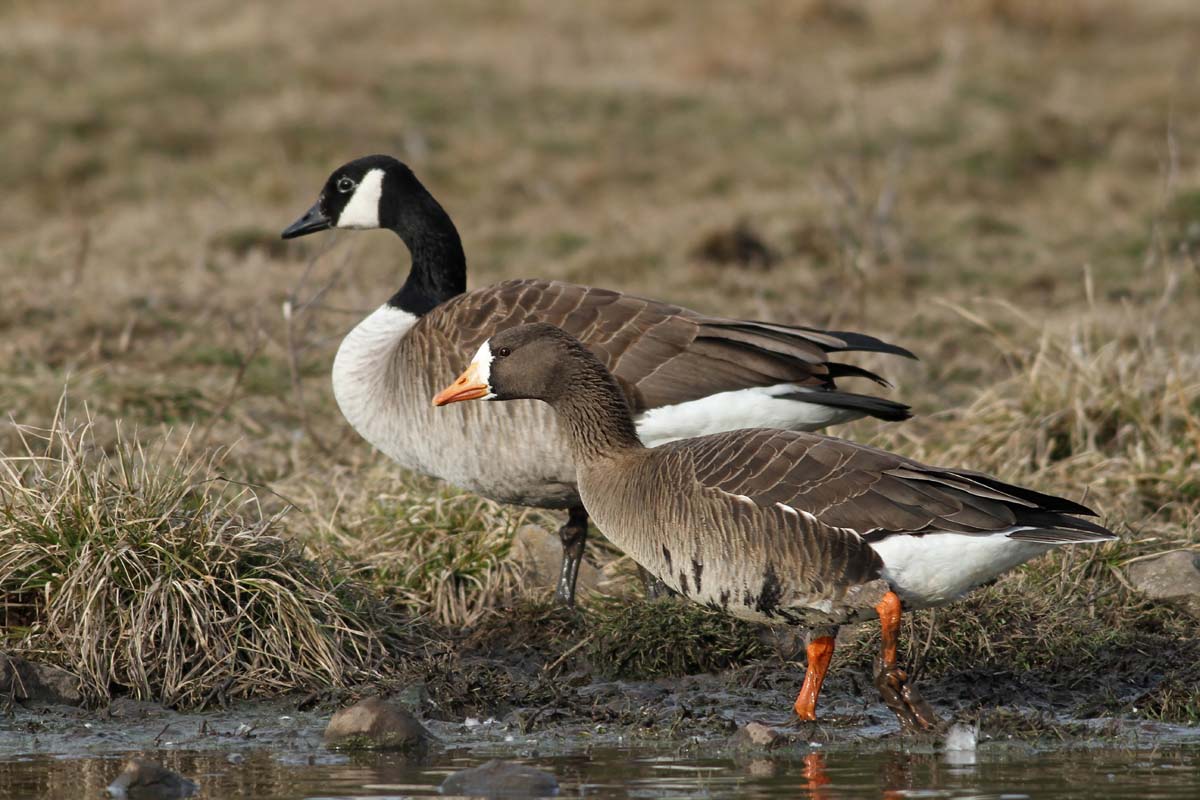
This photo shows a comparison between Greater White-fronted and Canada Goose. Photo by Nick Bonomo.
When to look: Most of the Greater White-fronts that we see in Connecticut breed all the way up in Greenland. They migrate to our latitude in late autumn. Some spend the entire winter. They head back north in early spring.
Conservation status: A common holarctic breeder, the IUCN places Greater White-fronted Goose in the “Least Concern” category.
Nick Bonomo is one of Connecticut’s most well-respected birders. He lives in Wallingford and blogs about his birding experiences at Shorebirder.