Ross’s Goose
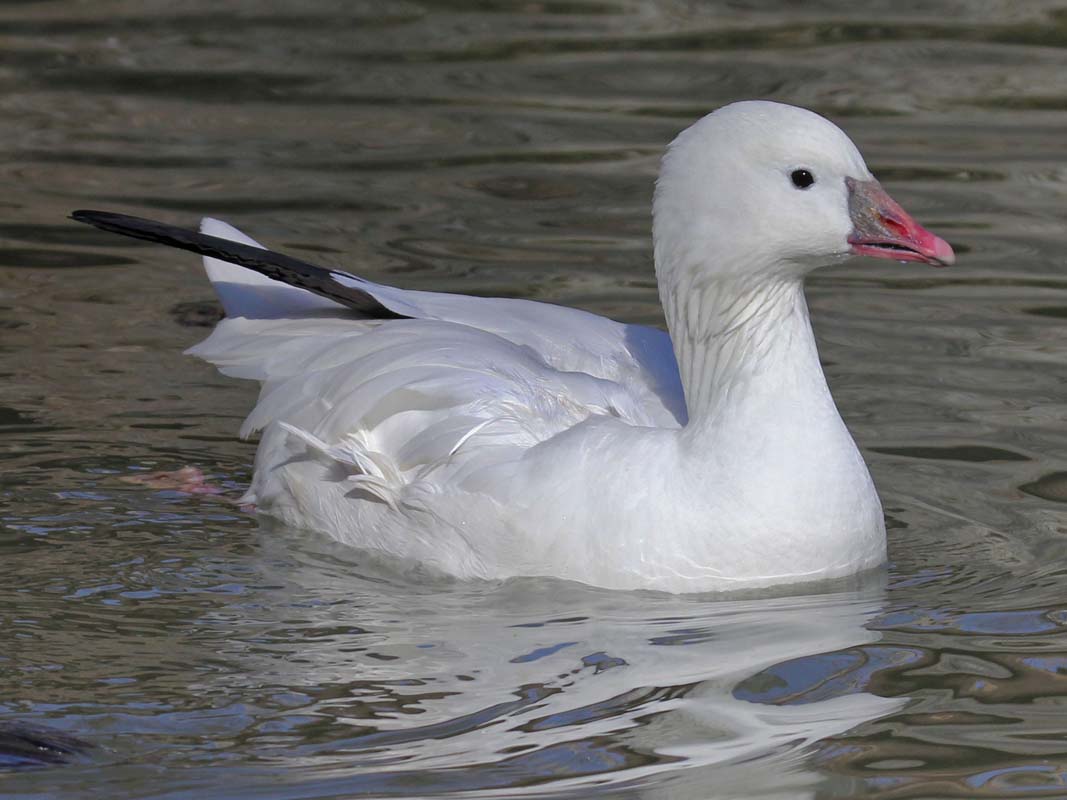
Chen rossii
by Andy Griswold, Director of the Connecticut Audubon Society’s EcoTravel program
Ross’s Goose is the smallest of our North American goose species, significantly smaller than its very similar looking cousin the Snow Goose. When comparing these two species, look for the tiny bill and distinctively diminutive shape of the Ross’s; petite compared to the more wedge-shaped of the Snow Goose. As with Snow Goose, Ross’s has two color forms, dark and white. Be sure to study the subtle differences of body plumages.
More commonly found on the central flyway during winter months, this is a great bird for Connecticut. If you really want to see Ross’s Goose in good numbers, join us for one of our frequent trips to Arkansas during winter months. The area we visit in Arkansas is called “The Rice Capital of North America” and the geese know to take advantage of these dormant fields as a winter feeding ground.
In Connecticut, Ross’s Goose has been seen with a number of other fine goose species among thousands of Canadas, including Pink-footed Goose, Greater White-fronted Goose, and Cackling Goose, the Pink-footed being the rarest of the group (although this is not its first occurrence in our state).
Ross’s Goose has enjoyed a significant increase in its population size because of changed agricultural practices and diminished hunting pressures since hitting a low number of 2,000 to 3,000 individuals in the early 1950s. Now estimated at over two million individuals, there is concern, in conjunction with a similar increase in population for Snow Goose, that the Arctic wetland habitat where they nest may be in peril due to overpopulation.
Photo by Dick Daniels, Carolinabirds.org