Black-bellied Whistling Duck
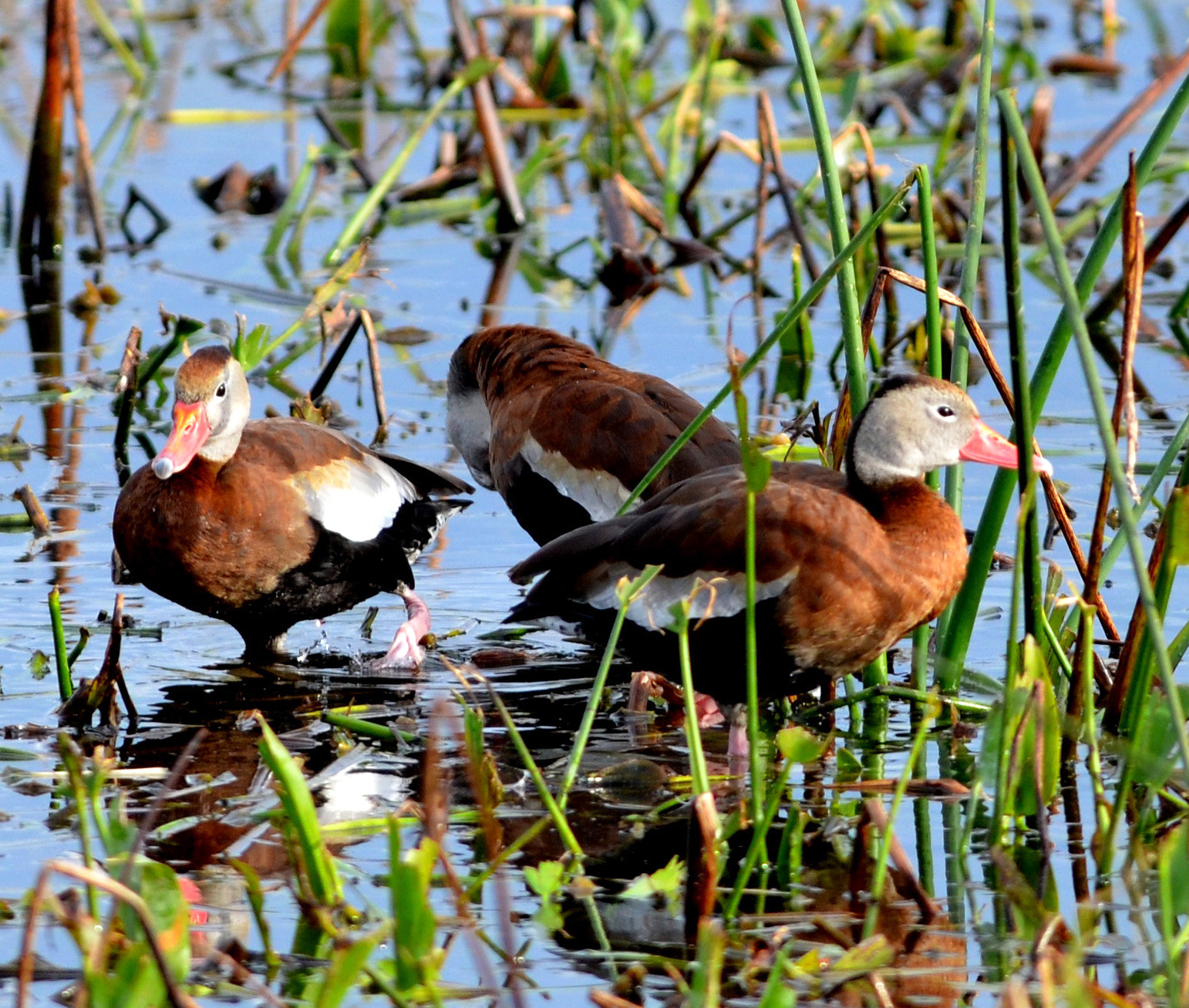
Black-bellied Whistling Ducks. Photo courtesy of Steve King.
The first state record of Black-bellied Whistling Duck was in mid August, 2018, when one showed up in Essex. Six have been found in Watertown in 2021.
Black-bellied Whistling-Duck
Dendrocygna autumnalis
This large, gooselike duck with a long neck, long legs, short tail, chestnut breast, black belly, bright pink legs, gray face with a strong white eye ring, surely looks like it has been put together by committee. It looks like a cartoon bird.
In flight, it has a noticeable hunched-back appearance and a broad white wing stripe. Male and female are similar. Young birds are a dull version of the adult with a mottled black belly.
The Black-bellied Whistling Duck is about 18.5 to 20.1 inches long and weighs 23 to 36 ounces.
This species eats mostly plant materials, including grasses and aquatic plants, by dabbling in shallow waters. Eating agricultural crops (particularly in rice fields) is where EcoTravel generally sees them on our trips to Texas in the spring. Certainly they may on occasion eat insects and snails.
Conservation Status: The North American population has been increasing and expanding its range for the last 50 years, likely the result of people providing nest boxes and perhaps global climate change. There have been a number of records for this species in surrounding states this summer.
Photo courtesy of Carolinabirds.org